From The Blood Is the Life, published 2024
By 1968, Hammer Films had become a respectable company. It was still known (and sometimes derided) for cranking out mid-budget horror fare, but its financial success could not be ignored. Even Queen Elizabeth took notice.
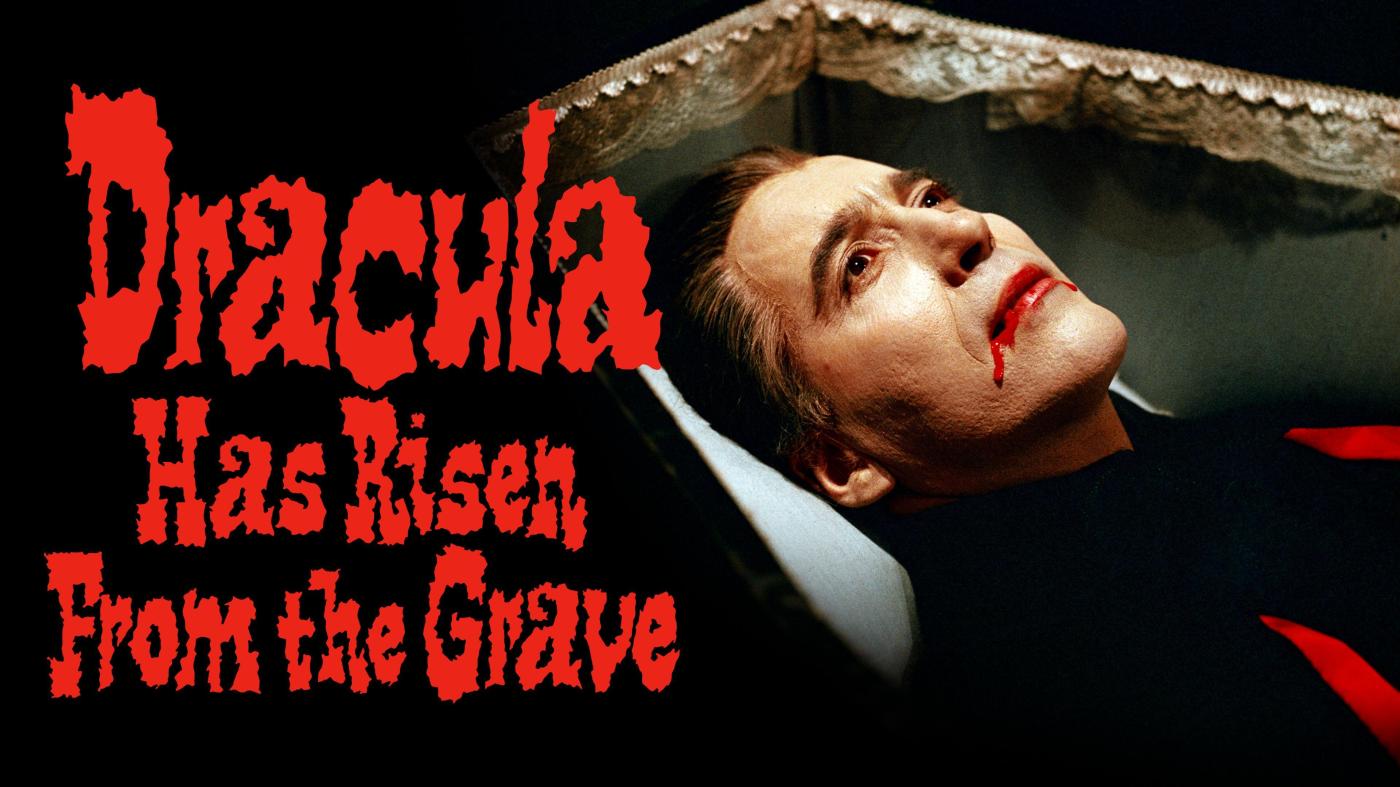
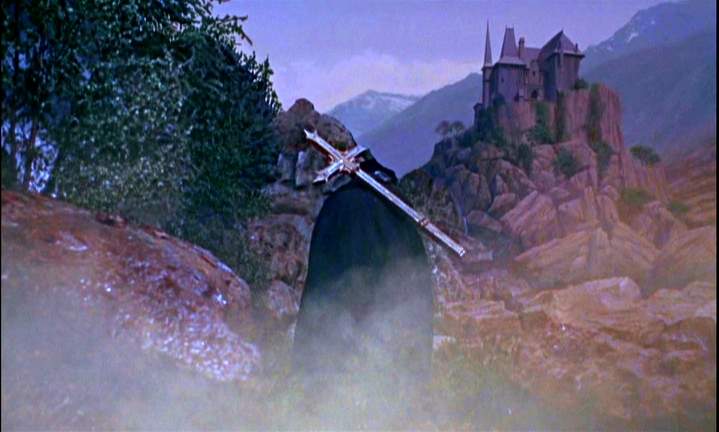
Her Majesty was not a fan of boundary-pushing Gothic adventures (that we know of), but Hammer became the first movie studio to receive The Queen’s Award for Industry, thanks to the millions in overseas earnings it brought into the British economy. The award was presented on the set of Dracula Has Risen from the Grave by the Lord Lieutenant of Buckinghamshire, who likely never imagined his job would include watching Christopher Lee being impaled on a cross, screaming while bright red “blood” oozed from his chest and eyes. According to Lee’s autobiography, the Lord Lieutenant deadpanned to his wife, “Do you know, my dear, that man’s a member of my club!”
Despite this rise in status, Hammer’s fourth official entry in the Dracula series lacks the relative refinement of its predecessors. This is due to a change in directors, with Freddie Francis taking over from Terence Fisher after the latter was injured in a car accident. This was the second film Francis would direct for the studio, after 1964’s The Evil of Frankenstein, and his style is grittier and less polished than Fisher’s. It’s also quite literally more in-your-face – Francis has a real fondness for extreme close-ups and POV shots. One wonders if any actors bumped into the camera as it swung toward them in the middle of a scene.
The storyline is perfunctory, not straying far from the formula established two years earlier in Dracula: Prince of Darkness. A small European village lives in fear of Dracula’s influence, even though he was supposedly destroyed after his previous escapades. Monsignor Mueller (Rupert Davies) goes to the Count’s castle to sanctify it and put an end to all this superstitious nonsense. This might be effective if not for the local priest (Ewan Hooper), who falls down a hill, landing on the same spot where Dracula has been trapped under a frozen river. The blood from the priest’s head wound conveniently leaks onto the vampire’s mouth, reviving him. Dracula shows his gratitude by enslaving the priest, using him to get revenge on Monsignor Mueller for his impertinence.
As always, this involves seducing a beautiful young woman, in this case Maria, the Monsignor’s niece. Played by the stunning Veronica Carlson (in her first Hammer production), Maria is not quite as innocent as she seems, and her uncle disapproves of her romance with local student Paul (Barry Andrews, who bears a striking resemblance to a young Roger Daltrey). Paul hangs around the local pub a bit too much, he’s also (gasp!) an atheist. When faced with a diabolical supernatural threat, he’s not going to be much use.
Paul’s inability to fight Dracula irritated Lee, who objected to the idea that anti-vampire tools are only useful to believers. Paul is expected to pray when he stakes Dracula, an act not required in previous films or subsequent ones. It’s just there for shock value, and maybe Lee had a point. At any rate, it sets up a terrifically exciting finale, as Paul must find his inner Christian action hero to save his beloved.
The script was written by Anthony Hinds, under the pseudonym John Elder, and as he was both a Hammer executive and the son of the company’s founder, his vision overruled Lee’s complaints about the change in undead lore. Lee always took his work this seriously, and grew increasingly frustrated with the way Dracula was written over the years, as well as with the studio’s reluctance to provide adequate pay for his involvement. Like his character, Lee kept coming back anyway, appearing in the series’ next four entries.
Dracula Has Risen from the Grave is in the middle range, both in timing and quality, but Lee’s performance is often better than the film itself (which was too frequently the case throughout his prolific career). The actor was 46 and suffering from back problems by this time, necessitating the help of his stunt double, Eddie Powell, for the more physical scenes. The regal bearing and charisma haven’t faded in the slightest, however. From his menacing, satisfied smile as he pursues his victims, to the raging agony of his death scene, Lee gives the role his all.
Carlson and Andrews are a sweet, attractive couple, the kind of vibrant young people you want to root for in a battle against evil. Character actors like Davies and the ubiquitous Michael Ripper lend their experienced presence (this was Ripper’s 29th Hammer appearance). Aside from Lee, Hooper gives the best performance, as a man of God whose weak-willed nature makes him a perfect thrall for the Count. Everyone trusts a kindly priest, after all, and Hooper makes the character’s shame and self-loathing palpable.
Hammer was known for its distinctive style and the stock company that brought it all together, and two of its most accomplished crew members are featured here. James Bernard contributes another strong, evocative score, although it lacks the iconic motif from the original. The sets are by Bernard Robinson, who again works wonders, making everything look rich and elegant despite the limited budget. Especially striking are the Escher-esque rooftops which Maria and Paul use to sneak around the village. Of course, you can tell when it goes from physical set to matte painting, but in a way, that makes the skill of it even more impressive. It’s a work of art the actors can climb on.
While Dracula Has Risen from the Grave has these classic Hammer qualities, its differences hint at what was to come in the 1970s. The sex and violence that made the studio notorious were always pretty tame, but they’re rougher here, closer to the exploitation films Hammer was sometimes unfairly associated with. The opening scene involves a woman’s bloody corpse hanging upside down in a bell tower, and a body is later disposed of in a baker’s oven. It’s not graphic, but it is disturbing.
Some changes are more cosmetic. Production had shifted to Pinewood Studios from the company’s longtime home at Bray Studios, which meant standing sets and landscapes were notably different. Although the locations weren’t that far apart geographically, it’s obvious that whatever village this is supposed to take place in is not one we’ve seen before.
Francis started his career as a cinematographer, and although Hammer veteran Arthur Grant had the job here, the director very much left his own visual imprint. The camera movement is both intrusive and disorienting, feelings enhanced by the decision to use colored filters any time Dracula is on screen. It’s not exactly a subtle technique, but the red, amber, and yellow tint around the frame add plenty of uncanny atmosphere. (It should, as Francis had used the same filters while shooting Jack Clayton’s classic The Innocents in 1961.)
Francis and Grant fumble one area badly, however – this has some of the worst day-for-night shooting you will ever see in a professionally made film. There are scenes in which the time of day is only indicated by whether Dracula can walk around outside. Even then, it looks like he’ll burst into flames if he steps out of the shade. Most low-budget productions of the era used this technique, but after years of practice – especially for two experienced cinematographers – it should have been handled more convincingly.
None of these issues hurt Dracula Has Risen from the Grave at the box office. Hammer had just signed an American distribution deal with Warner Bros.-Seven Arts, which launched a tongue-in-cheek ad campaign featuring a woman with Band-Aids on her neck and cracks about hickeys and tooth-brushing. It was all very silly, but it worked. The film was a box office smash, and guaranteed that Dracula would rise from five more graves before the series finally wore itself out. – Loey Lockerby
 suchacritic.com
Leave a comment