From Christopher Lee: Cinema’s Prince of Darkness, published 2026
By 1976, Christopher Lee was breaking away from the horror genre he had done so much to popularize. He played Mycroft Holmes in The Private Life of Sherlock Holmes (1970), a box office failure that nonetheless offered him a chance to work with Billy Wilder. The next year, Lee had a small role in the western Hannie Caulder. Then came the triple threat of Richard Lester’s Three Musketeers (1973) and Four Musketeers (1975), and The Man with the Golden Gun (1975). The latter finally provided an opportunity to play a Bond villain, years after Lee’s step-cousin, Ian Fleming, suggested he’d make a good Dr. No. All three films were international hits, and the actor’s mainstream visibility was at its highest point to date.
Wilder and others had recommended a move to Los Angeles, but it was Richard Widmark, Lee’s co-star in 1975’s To the Devil…a Daughter, who finally convinced him to take the plunge. That project had been fraught with financial and script problems, and gave Lee an anti-climactic death scene that he vocally despised (“A rock! How do you kill a Satanic character with a rock?”). It was, fittingly, the last in Hammer Films’ long run of horror features, the proverbial nail in the coffin of a once-great studio. It didn’t take a rock upside the head to convince Lee it was time to move on.
With his wife, Gitte, and daughter, Christina, he settled into an apartment on Wilshire Boulevard, and a high-profile offer came almost immediately. Lee was cast in the ensemble of Airport ‘77, the third entry in the blockbuster disaster series that began with Airport in 1975. It was a perfect Hollywood entry point, a big, silly melodrama that allowed Lee to work with the likes of Jack Lemmon (who became a golfing buddy) and Olivia de Havilland (with whom he had appeared briefly in 1955’s That Lady). Lee got a much better, heroic demise this time, in a risky underwater sequence which earned him a commemorative belt buckle from the Stunt Men’s Association.
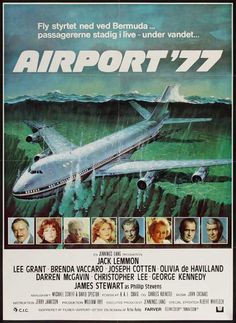
Airport ‘77 was a hit, earning over $90 million worldwide on a $6 million budget. Although it was an ensemble piece, it gave Lee the chance to play a sympathetic character in a movie seen by millions. After 20 years of supernatural adventures and/or pure villainy, it was a welcome step outside the box.
His next two efforts were much less impressive. Starship Invasions was an oft-renamed science fiction film whose silly costumes and terrible special effects would have been bad enough in any year, but it had the misfortune of being released between Star Wars and Close Encounters of the Third Kind. It was followed by End of the World, a truly bizarre early production from low-budget legend Charles Band. Featuring cloning, telekinetic disasters, and alien nuns, it gets credited with a certain camp value, but it didn’t exactly help Lee’s career momentum.
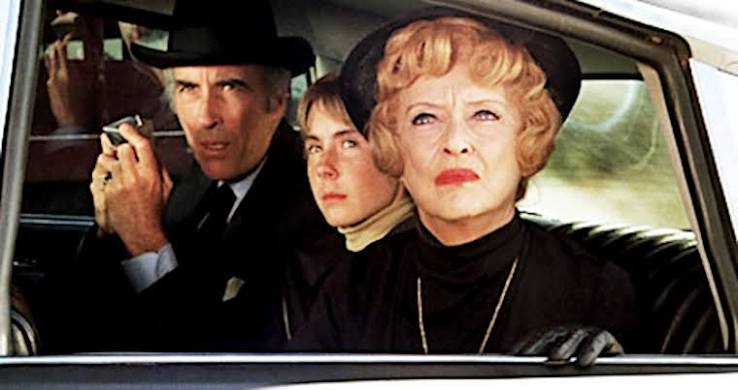
Next came Return from Witch Mountain, a 1978 sequel to Disney’s 1975 hit Escape to Witch Mountain. Lee plays a bad guy again, but he does so alongside Bette Davis in a popular family-oriented franchise. Its success marked another new opportunity, introducing Lee to a whole generation of children who were too young to remember his horror heyday.
The first edition of Lee’s autobiography was published in 1977, and readers got a glimpse of his dry, self-deprecating wit. That unexpected sense of humor went on full display on March 25, 1978, when he hosted Saturday Night Live. In its third season, the sketch comedy series was rapidly launching careers and catchphrases, so Lee overcame his nerves about the format and flew to New York for a week’s rehearsal before the live show. By the time of the broadcast, he had adjusted sufficiently to deliver a charming, confident performance, sending up his scary persona while holding his own with the original “Not Ready for Prime Time Players.” The bit where he plays an apologetic Grim Reaper, confronted by a child (Laraine Newman) whose dog has just died, deserves a place among the all-time SNL classics.
The show was seen by over 30 million viewers, which led to a run of comedic offers. Lee turned down The Kentucky Fried Movie because director John Landis wanted him to dress up as Fu Manchu, and Airplane! because the then-novice filmmakers did not have a finished script (the part went to Leslie Nielsen). Lee relented when Steven Spielberg approached him for 1941, his unlikely follow-up to Close Encounters. Based on a real World War II incident in which a Japanese submarine fired on the California coast, 1941 is a sprawling, slapstick farce. Lee has a small role as a Nazi captain accompanying the Japanese crew, speaking only German while his counterpart (Toshiro Mifune) speaks only Japanese. The gag is that they understand each other perfectly, trading insults until Mifune angrily throws Lee into the ocean.
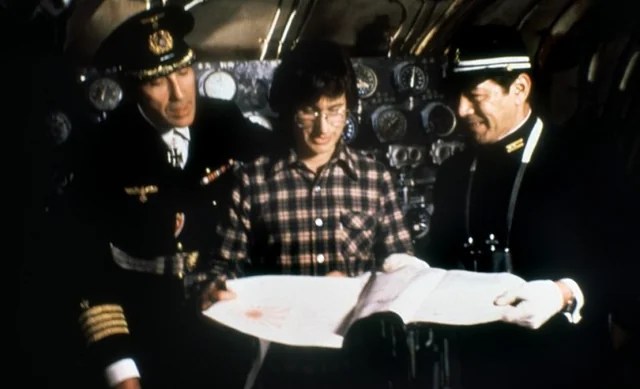
Spielberg shows no particular gift for comedy, relying on noise and manic energy, which are relentless (critic Pauline Kael compared it to “having your head inside a pinball machine for two hours”). Although it eventually turned a profit, 1941 was considered a failure for the wunderkind director. Even as it developed a cult following over the years, it is still most generously described as a series of punchlines connected by screaming.
While filming 1941, Lee commuted to Alaska for Bear Island, an arctic thriller with Widmark and Vanessa Redgrave. It was another small role in a middling production, but it exemplified his willingness to try pretty much anything (in this case, learning to walk in snowshoes in a region whose temperature occasionally dropped to -40 degrees Fahrenheit).
Despite his new North American base, Lee’s work regularly took him around the globe, even further afield than he’d gone while living in England. He joined one of the few Western film crews to shoot in Iran, for Caravans (1978), went to Israel for a small role in the martial arts film Circle of Iron (1978), raced around Zimbabwe and South Africa in Safari 3000 (1982), and made two trips to India (for 1984’s The Far Pavilions and the unfinished The Bengal Lancers). Europe still beckoned, mostly for small roles in adventure films like The Passage (France, 1979) and The Salamander (Italy, 1983). And, of course, there was the infamous, baffling 1984 sojourn in Czechoslovakia for Howling II: Your Sister Is a Werewolf (released, somehow, in 1985).
Lee returned to work in the U.K. three times during this period. Arabian Adventure (1979) is an old-fashioned fantasy in which he plays a villain similar to the one portrayed by Conrad Veidt in The Thief of Bagdad (1940). Lee had long idolized Veidt and considered this an opportunity to pay tribute. He also got to socialize offscreen with Peter Cushing, who had a cameo, but no scenes with Lee.
After inexplicably playing Prince Philip in the poorly-aged TV movie Charles & Diana: A Royal Love Story (1982), Lee reunited with Cushing and Vincent Price in Pete Walker’s House of the Long Shadows, released in 1983. The three old friends hadn’t worked together in several years, and enjoyed the opportunity, especially with John Carradine along for the ride. But Walker could never figure out what to do with these legends – when asked how he directed them, Lee quipped, “He didn’t.” Luckily for Walker (if not for his stars), they all had considerable experience elevating poor material, and they bring the full force of their talent and charisma to this creaky “old dark house” mystery. For all its flaws, House of the Long Shadows is like a tattered security blanket, cozy and comforting even when it’s falling apart.
Back in America, Lee’s choice of roles remained decidedly unpredictable. In 1984 alone, he could be seen in an episode of Shelley Duvall’s Showtime series Faerie Tale Theatre, the raunchy comedy The Rosebud Beach Hotel, and a short called New Magic, created to promote the Showscan large-screen cinema format. The drastic swings in style and quality were typical of Lee’s career, and there wasn’t a genuine classic anywhere in this part of his filmography.
There was plenty of variety, though, and that seems to be what kept him going. The L.A. lifestyle certainly didn’t suit him or Mrs. Lee. He was fond of the city’s golf courses, but little else, and Gitte traveled frequently on her own while he was away on set, hoping to escape the “cultural vacuum” of Hollywood (Christina was usually at school back in Europe). The move had been undertaken to shake up his career prospects, and it was worth the smog and superficiality to see it happen.
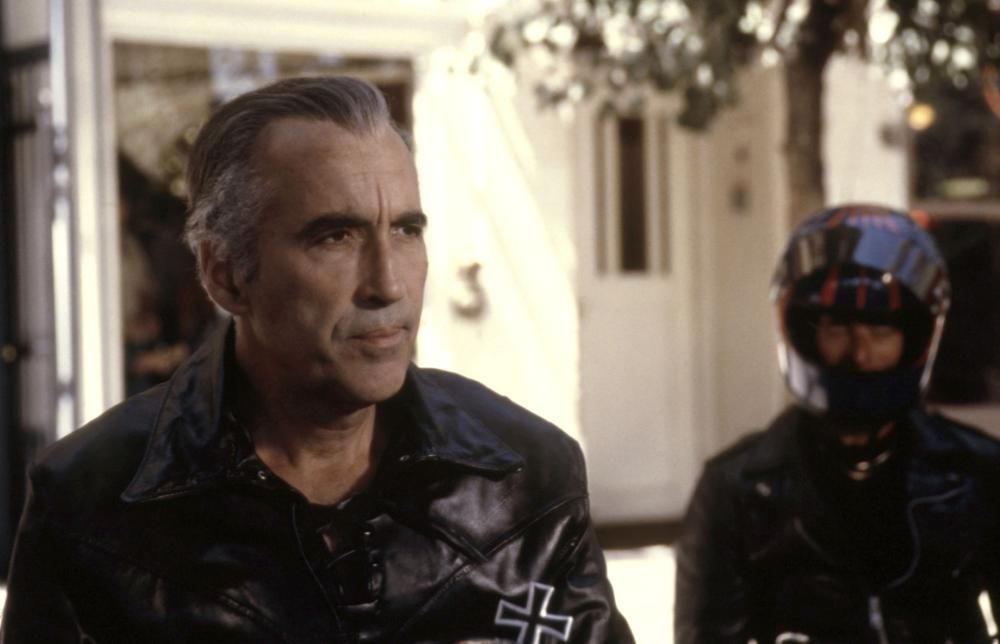
This is best illustrated by the films Lee gives special attention to in his autobiography. After a litany of so-so television roles, he brings up perhaps the most surprising performances of his long career. The first is in Serial (1980), a satire of late-’70s suburbia, in which he plays an American businessman who moonlights as the leather-clad leader of a gay biker gang. The subversive twist delighted Lee, finally giving him a character whose secret life didn’t involve the occult or some variation on that bête noire, Count Dracula.
The second is 1983’s The Return of Captain Invincible, a politically-minded superhero rock musical (really), in which Lee plays the nemesis of Alan Arkin’s title character. Filmed in Australia, it never got a U.S. theatrical release, and is widely regarded as a creative misfire. But Lee’s big number, “Name Your Poison,” is rightly more famous than the movie it’s in. Written by Richard O’Brien and Richard Hartley, of Rocky Horror fame, it features a litany of booze options to tempt the alcoholic hero. Lee throws himself into the part, growling and shouting, then unleashing that famous bass-baritone. He even dances a little. It’s a real showstopper, and great fun to watch.
The Lees returned to London permanently in 1985, where he underwent surgery to repair a heart valve, necessitating a rare work break of two months. His career then resumed with its usual ups and downs. It would be several years before fans like Tim Burton and Peter Jackson began offering up juicy roles in hit films, finally making Lee a blockbuster star in his 70s, but the relocation to Tinseltown had served its purpose. The world now knew that there was much more to Christopher Lee than that bloody guy in the cape. – Loey Lockerby


Leave a Reply